

Why the Warm-Up Is Often the First Thing to Go — and Why That’s a Problem

If Time Is Limited, Reduce the Work — Not the Warm-Up

Instructions spéciales concernant la commande
Horse
Horse
Therapy
Horse Boots
Sun & Fly
Headcollars & Leadropes
Rugs
Feed & Hay blocks
Treats
Haynets
Bucket Covers
Riding Accessories
Dog
Dog
Dog Wellbeing
Dog Enrichment
Dog Treats
Dog Toys
Dog Coats
Dog Therapy
Shop by Range
Additional B2B Information
Additional B2B Information
Shop by Discipline
Shop by Discipline
Education Zone
A Veterinary Physiotherapist’s Guide to Warming Up (and Cooling Down) Your Horse
Winter, early spring, and periods of reduced turnout can make riding routines feel harder to maintain. Cold temperatures, heavier or frozen ground, and less daylight all increase the temptation to rush — particularly when time is tight.
But from a physiotherapist’s perspective, this is when warming up properly matters most.
To help horse owners navigate this, we spoke to Vicky Boakes, Veterinary Physiotherapist and Research & Development Manager at Equilibrium, alongside Hannah Donnelly, Chartered Veterinary Physiotherapist in both human and veterinary medicine and Head of Sales at Equilibrium, to share practical, evidence-led advice on warming up, cooling down, and supporting both horses and riders through more demanding conditions.
Prefer to listen to the podcast? Listen here on Spotify, here on Apple or here on Amazon Music.
“When people are busy, the warm-up is usually the first thing to be shortened,” explains Vicky. “But physiologically, it’s one of the most important parts of the session.”
Horses coming out of the stable after a cold night, or standing in the field with limited movement, often have:
• Cooler muscles
• Stiffer joints
• Reduced circulation through soft tissues
As Vicky explains, joints rely on synovial fluid to lubricate movement (Tortora and Derrickson, 2021). When temperatures are low and horses haven’t been moving, that fluid is more viscous and needs time — and movement — to warm up properly (Hall, 2021).
“It takes at least 10–15 minutes for joints and soft tissues to warm sufficiently. Skipping that stage increases the risk of strain, especially when conditions are challenging.” (ACSM, 2021).
One of the most common misconceptions Vicky sees is that a long warm-up wastes riding time.
In reality, it’s the opposite.
“If you only have 30 minutes, you’re far better spending half of that warming up properly and shortening the main work, rather than rushing the warm-up and asking too much too quickly.”
Warm-up time doesn’t need to mean aimless walking. It should focus on:
• Gradual increases in movement
• Transitions (walk-halt-walk)
• Encouraging the horse to bend and move through their body
• Gentle lateral work towards the end of the warm-up phase
This prepares multiple muscle groups and allows the horse to move more freely once intensity increases. Warming up helps horses use oxygen more efficiently during hard exercise, so their muscles work better and fatigue less quickly (Tyler, Hodgson & Rose 1996).
Winter and early spring bring constantly changing surfaces - wet, rutted, frozen, or inconsistent ground.
“Horses adapt to the surfaces they work on,” says Vicky. “If they’re suddenly asked to work on uneven or slippery ground without adequate preparation, tendons and ligaments are at higher risk because they’re not primed for that load.” (Janczarek, I. et al. (2021)
Being mindful of:
• Where you ride
• How quickly you increase intensity
• Whether your horse has been working consistently
…can significantly reduce strain during this time of year.
Hannah reminds us: “ Most of us arrive to the yard straight from work, and a lot of us have office-based roles which involves a fair amount of sitting down. That’s why it’s also important to warm yourself up prior to your ride, to ensure your own muscles and joints are ready. If your body is stiff, this can lead to asymmetry and impaired movement of the horse (MacKechnie‑Guire, et al 2020). Studies also show a warm-up can positively affect delayed onset muscle soreness (DOMS) (Law and Herbert, 2007).”
A basic active routine targeting those usual tight areas (ie. hips, backs, shoulders) can make a difference on your own suppleness and therefore your horses’ suppleness.
Try:
*Please note* - if you have any pre-existing injuries, these must be discussed with a
physiotherapist or a doctor prior to attempting these exercises.
Like horses, humans can also experience delayed onset muscle soreness (DOMS) and fatigue after exercise. That is why a gentle, active cool down can prevent the severity of DOMS and enable riders to feel good after their sessions. Some ideas for an active cool down can include:
Maintaining mobility is important in horse-riding, and consistent active movement before and after riding can help maintain healthy joints and range of motion.
Did you know? You can use the Massage Mitt Hotspot on yourself too!
*Please note* - if you have any pre-existing injuries, these must be discussed with a physiotherapist or a doctor prior to attempting these exercises.
Warming up properly isn’t about doing more, riding longer, or being perfect.
It’s about:
• Allowing time for tissues to prepare
• Being mindful of conditions
• Staying consistent when routines feel harder
As Vicky puts it:
“Good horsemanship isn’t about shortcuts. It’s about preparation — especially when conditions are challenging.”
Reference list
American College of Sports Medicine (ACSM) (2021) ACSM’s Guidelines for Exercise Testing and Prescription. 11th edn. Philadelphia, PA: Wolters Kluwer.
Hall, J.E. (2021) Guyton and Hall Textbook of Medical Physiology. 14th edn. Philadelphia, PA: Elsevier.
Janczarek, I., et al. (2021) Thermographic analysis of the metacarpal and metatarsal areas in jumping sport horses and leisure horses in response to warm‑up duration. Animals, 11(7).
MacKechnie‑Guire, R., MacKechnie‑Guire, E., Fairfax, V., Fisher, M., Hargreaves, S. and Pfau, T. (2020) The effect that induced rider asymmetry has on equine locomotion and the range of motion of the thoracolumbar spine when ridden in rising trot. Journal of Equine Veterinary Science, 88, 102946
Law, R.Y.W. and Herbert, R.D. (2007) “Warm-up reduces delayed-onset muscle soreness but cool-down does not: a randomised controlled trial,” Australian Journal of Physiotherapy, 53(2), pp. 91–95. Available at: https://doi.org/10.1016/S0004-9514(07)70041-7.
Tortora, G.J. and Derrickson, B.H. (2021) Principles of Anatomy and Physiology. 16th edn. Hoboken, NJ: Wiley.
Tyler, C.M., Hodgson, D.R. and Rose, R.J. (1996) Effect of a warm‑up on energy supply during high intensity exercise in horses. Equine Veterinary Journal, 28(2), pp. 117–120.
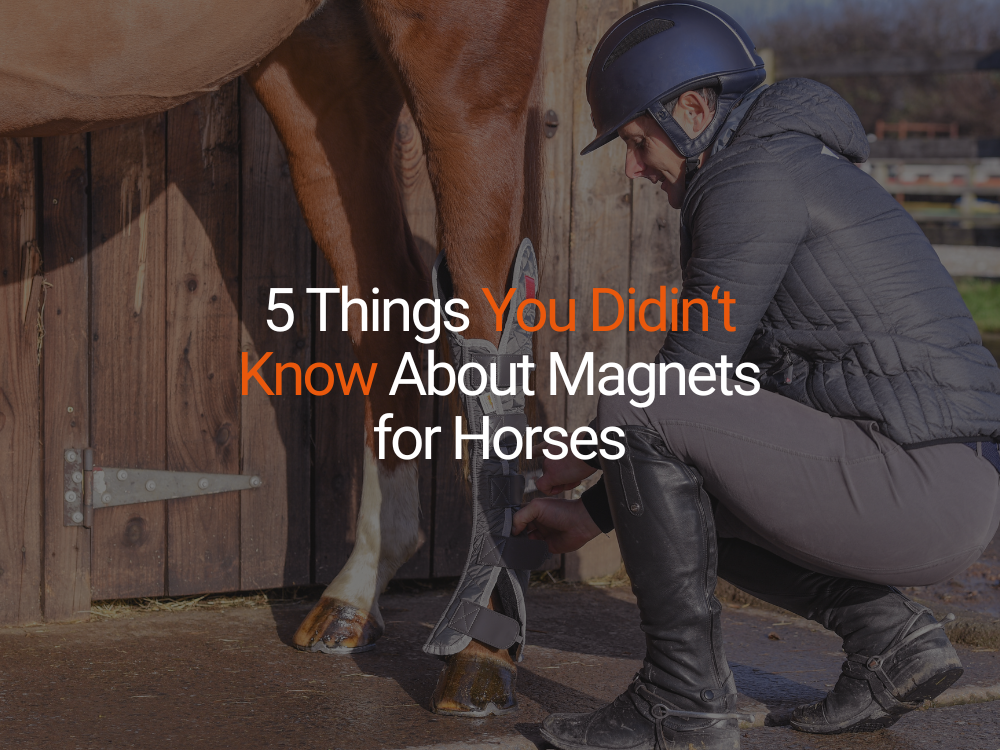
5 choses que vous ne saviez pas sur les aimants pour chevaux
Que vous croyiez ou non aux aimants, il y a quelque chose de mystérieux dans l'effet qu'ils peuvent avoir sur le corps. Et même si les preuves scientifiques sont difficiles à trouver, nous connaissons certaines vérités et avons certainement été témoins de résultats positifs en matière de maintien des pattes et du dos des chevaux en pleine forme.
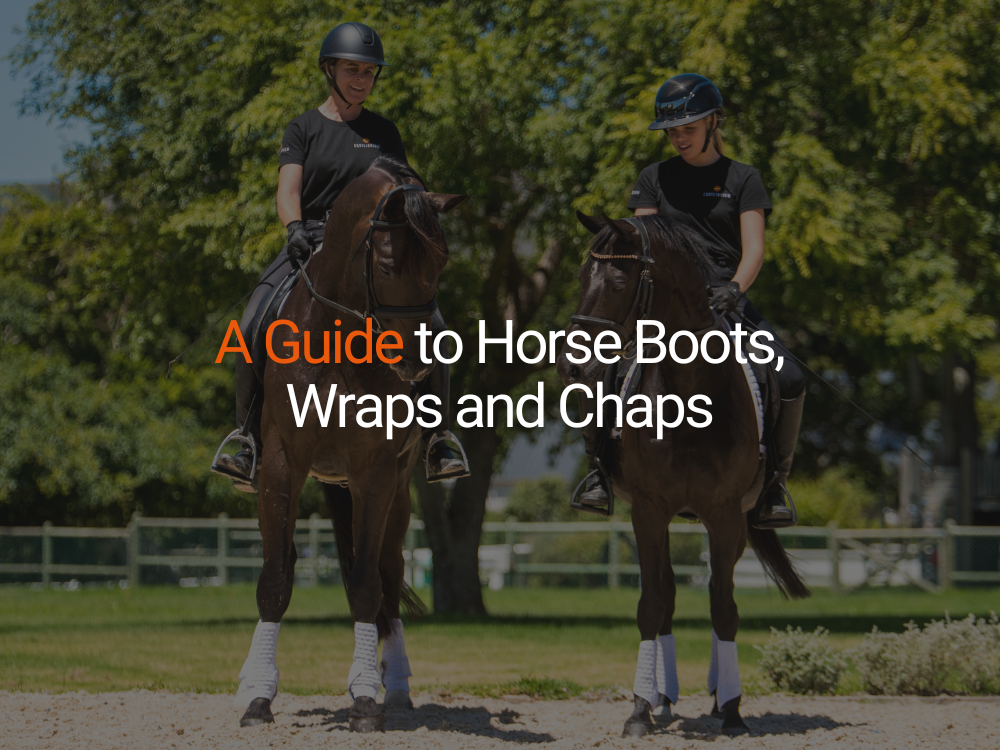
Un guide des bottes, enveloppes et mini-chaps pour chevaux
En tant que cavaliers et propriétaires de chevaux, nous demandons à nos chevaux de vivre et de travailler d'une manière qui ne serait pas le cas dans la nature. Par conséquent, nous devons leur fournir une protection des pattes contre les blessures causées par des impacts externes, des blessures auto-infligées et des problèmes liés au stress.
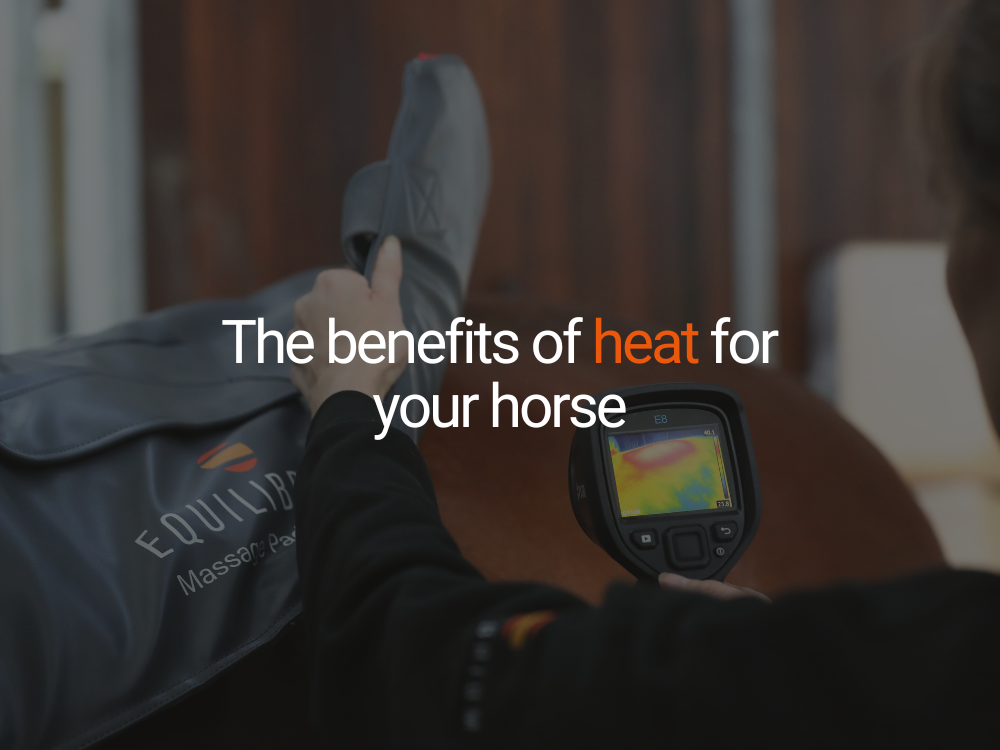
Les bienfaits de la chaleur pour votre cheval
Certains chevaux, s'ils sont mal à l'aise ou particulièrement sensibles, peuvent trouver le massage trop stimulant. L'utilisation de la chaleur seule est un excellent outil dans ces conditions car elle est très peu invasive et est généralement bien acceptée même par les âmes les plus sensibles. La chaleur doit être concentrée sur une petite zone pour un effet optimal. Pour d'autres chevaux, c'est un excellent outil, seul ou combiné à un massage, qui apporte plusieurs avantages.
Sign up for our mailing list for updates on our products, sales and exclusive rewards
Connect With Us
© 2026,
Equilibrium.Copyright © 2024 Equilibrium Products Limited. Registered in England and Wales No. 03762996.
We use cookies and similar technologies to provide the best experience on our website.