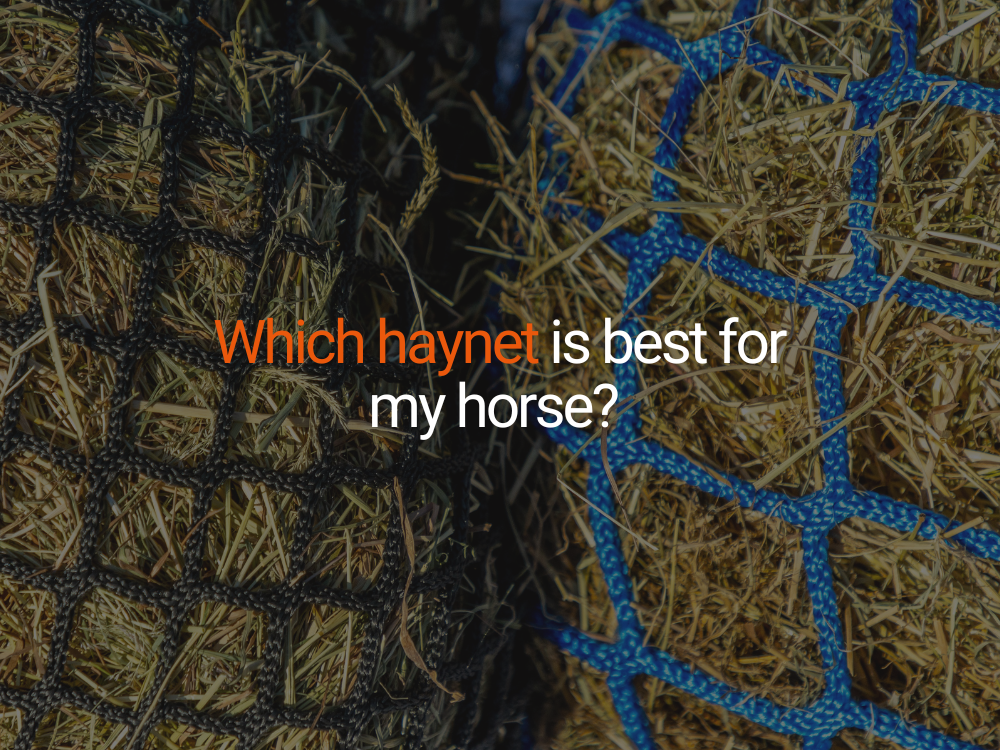
Colic is a leading cause of death in horses and can be caused by a variety of factors. For example, fast eaters may not chew their food properly, which hinders effective digestion and can increase the risk of impaction colic. Including plenty of forage in your horse’s diet, feeding small quantities and using good quality, high fibre, feed stuff is a good way to maintain a healthy digestive system. If your horse has a habit of mixing hay within their bed, using a haynet could help keep these separate to reduce the chance of bedding ingestion. The 6cm mesh size Portion Pacer Haynet allows horses to eat at a similar rate of ad lib, floor fed hay, while keeping hay neat and tidy and away from the bed.
2. Reducing the Risk of Choke
Choke is another common issue for horses that eat too quickly. When a horse swallows large pieces of food without sufficient chewing, the food can become lodged in the oesophagus, leading to a painful and potentially dangerous condition. While choke often resolves on its own, severe cases may require veterinary intervention. If your horse is prone to choking on hay, a small holed haynet will only allow them to pull smaller mouthfuls of hay, encouraging slower eating. Soaking hay or feed can also slow down a greedy eater. Wet hay is heavier and more difficult for a horse to eat quickly.
3. Maintaining Digestive Health
Horses have delicate digestive systems that are designed for constant, slow intake of forage. When they eat too quickly, it can disrupt the natural digestive process and may mean they are left without food for long periods of time, leading to issues such as indigestion or gastric ulcers. A horse that eats slowly has more time to thoroughly chew and mix saliva with its feed, aiding digestion and maintaining a healthy gut. One of the simplest and most effective ways to slow down a horse’s eating is by using a slow-feed hay net. These nets have smaller holes than traditional hay nets, forcing the horse to work harder to pull out small amounts of hay at a time. The Portion Pacer 3cm Holed Haynet extended eating times by 30% on average in a field based observational study looking at 10 horses and 10 ponies eating over 6 hours.
4. Preventing Boredom and Behavioural Issues
Horses are intelligent animals that can become bored easily, especially when they are in stables for extended periods. Slowing down their eating can help to keep them engaged for longer periods, which reduces boredom and frustration. Using haynets in multiple areas to encourage movement (in the stable or field), hay balls and slow feeder nets are all easy to implement methods of increasing engagement and enrichment.
5. Over-eating and Weight Management
Did you know horses at pasture can easily eat 2% of their bodyweight in dry matter? For a 500kg horse means 73kg of pasture fresh weight! For horses where weight gain is a challenge a grazing muzzle or strip grazing can help reduce intake without restricting time out at pasture which has many other health benefits. This is particularly useful for horses that tend to gorge on lush pasture, which can increase the risk of laminitis. Alongside this, using a small holed haynet in the field or stable could help reduce the rate of intake, and therefore limit calories.
There are many advantages to using a haynet and a size to suit every horse. They offer many practical benefits as well as health benefits, so are well worth considering whenever you need to stable your horse.
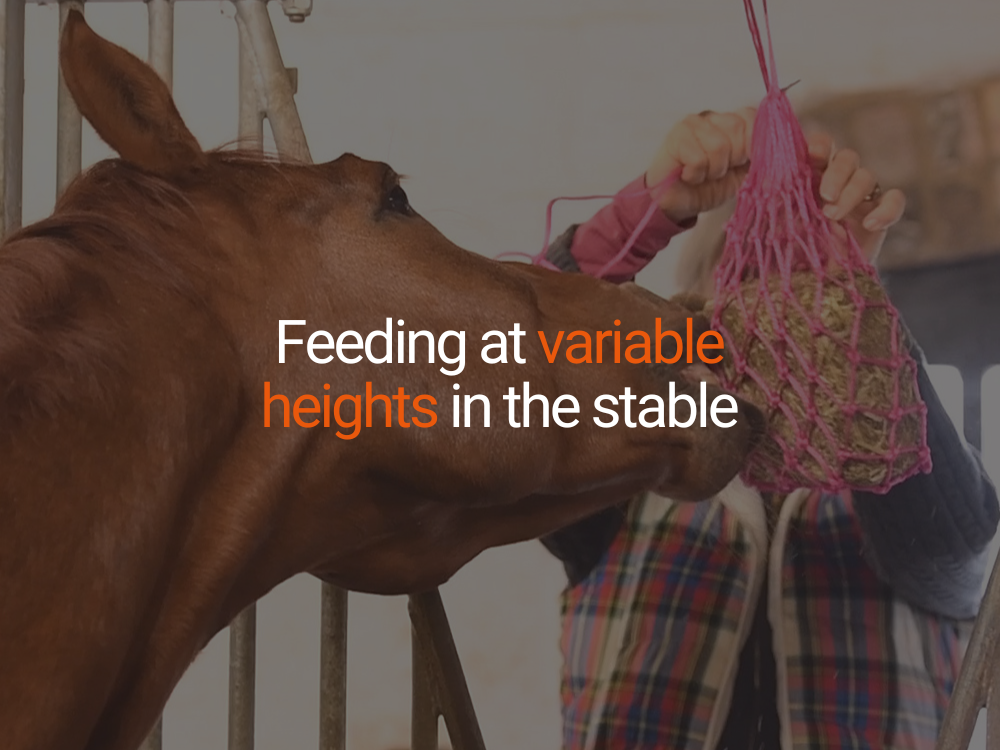
While horses are grazers, if you watch them in the field, they don't just have their heads down and eat grass. If they have a hedgerow you will quite often find them borrowing away to find little 'treats', or they might even eat some other vegetation at varying heights. Horses in the wild graze for 80% of their time, and browse for 20%.
Caring for horses in winter can be tough, whether you're stabling your horses or turning them out... or just want to ride! We’ve put together a few tips on how to look after your stabled horse in winter, which brings about a few challenges.